
Quran Gallery Blog · Articles
Four Texts, Not Folklore: What Revelation Actually Prescribes Against Magic and the Jinn
Magic and the jinn attract more speculation than almost any other topic in circulation online. Here is what the Qur'an and four resolvable hadith actually prescribe against them — and what we are leaving out because it does not resolve to a source we can show you.
6 min read4 sourcesRuqyah
Author:The Quran Gallery team
Type “cure for magic” or “protection from jinn” into a search engine and you will find sidr-leaf baths, seven-day water regimens, and oils rubbed on the scalp, each attributed to “the Sunnah” with no page anyone could open. Some of these practices trace back to respected scholars describing what worked for people in their care; others are folklore wearing a hadith’s clothing. We are not going to sort the two apart in this piece, because sorting them apart is not what makes a remedy sound — a resolvable primary text is. So this article keeps to four texts we can show you exactly where they come from, plus two Qur’anic verses verified against our own corpus. If a claim about magic or the jinn cannot be traced that way, it is left out, not softened.
Jinn Are a Named Creation, Not a Metaphor
The Qur’an devotes an entire sūrah — Sūrat al-Jinn — to beings Allah created from smokeless fire, capable of belief and disbelief like humans, and answerable to Him like humans. That is the extent of what revelation asks us to affirm: a real, unseen creation, some of it hostile, none of it outside Allah’s power. Building a detailed folklore on top of that one fact — what jinn eat, where they live, why a particular door creaks — is exactly the kind of embellishment this article is declining to repeat.
What the Qur’an also affirms, more carefully than popular retellings usually allow, is that magic (siḥr) is a real human practice with real effects, not merely superstition — and not something to be afraid of either. Sūrat al-Falaq names it directly among the things a believer seeks refuge from:
وَمِن شَرِّ ٱلنَّفَّـٰثَـٰتِ فِى ٱلْعُقَدِ “And from the evil of the blowers in knots” — Sūrat al-Falaq, 113:4
That single verse is doing two jobs at once: acknowledging that people practice this, and placing it inside a chapter whose entire structure is a request for protection — not a battle plan, not a remedy list, a request addressed to Allah. That framing carries through everything that follows.
The Verse Named as the Strongest Protection
Among reciters and scholars alike, Āyat al-Kursī is described as carrying weight no other single verse does — not because of ritual power in the words themselves, but because of what the verse says: that Allah does not sleep, does not tire, and holds everything in the heavens and the earth without any of it wearing on Him.
ٱللَّهُ لَآ إِلَـٰهَ إِلَّا هُوَ ٱلْحَىُّ ٱلْقَيُّومُ ۚ لَا تَأْخُذُهُۥ سِنَةٌ وَلَا نَوْمٌ ۚ لَّهُۥ مَا فِى ٱلسَّمَـٰوَٰتِ وَمَا فِى ٱلْأَرْضِ ۗ مَن ذَا ٱلَّذِى يَشْفَعُ عِندَهُۥٓ إِلَّا بِإِذْنِهِۦ ۚ يَعْلَمُ مَا بَيْنَ أَيْدِيهِمْ وَمَا خَلْفَهُمْ ۖ وَلَا يُحِيطُونَ بِشَىْءٍ مِّنْ عِلْمِهِۦٓ إِلَّا بِمَا شَآءَ ۚ وَسِعَ كُرْسِيُّهُ ٱلسَّمَـٰوَٰتِ وَٱلْأَرْضَ ۖ وَلَا يَـُٔودُهُۥ حِفْظُهُمَا ۚ وَهُوَ ٱلْعَلِىُّ ٱلْعَظِيمُ “Allah — there is no deity except Him, the Ever-Living, the Sustainer of existence. Neither drowsiness overtakes Him nor sleep. To Him belongs whatever is in the heavens and whatever is on the earth. Who is it that can intercede with Him except by His permission? He knows what is before them and what is behind them, and they encompass not a thing of His knowledge except for what He wills. His Kursī extends over the heavens and the earth, and their preservation tires Him not. And He is the Most High, the Most Great.” — Sūrat al-Baqarah, 2:255
A verse about Allah’s power, recited by someone who fears they are under attack, is a statement of trust before it is anything else. That is worth saying plainly, because it is easy to read a “protection verse” as a spell and miss that it is a prayer.
What the Prophet Is Reported to Have Said About the Two Refuge Chapters
Sūrat al-Falaq and Sūrat al-Nās are known together as al-Mu’awwidhatān — “the two chapters of refuge” — and one companion’s testimony about them resolves to a printed page we can point you to. ʿUqbah ibn ʿĀmir reported that while traveling with the Prophet (peace and blessings be upon him) between al-Juḥfah and al-Abwāʾ, a violent wind and darkness overtook them, and the Prophet (peace be upon him) began reciting Sūrat al-Falaq and Sūrat al-Nās, telling him: “Seek refuge with these two, for no seeker of refuge has sought refuge with anything like them” — recorded on printed page 2/591 of , where the editors grade the chain sound.
That is a strong claim about two very short chapters, and it is the textual basis for treating them — recited, not worn as an amulet or written on paper — as the first thing to reach for, well before any home remedy.
The Hadith Behind “Recite Sūrat al-Baqarah”
A second, separate hadith is often summarized as “Sūrat al-Baqarah repels magic,” which overstates what the text says. What the Prophet (peace be upon him) is reported to have said is about the discipline of reciting it at all: “Recite Sūrat al-Baqarah, for taking it up is a blessing and abandoning it is a loss, and the magicians cannot overcome it” — recorded on printed page 1/553 of . The claim is about sustained recitation, set inside a longer hadith about the Qur’an interceding for those who carried it — not a single reading performed as a cure.
The Prophet’s Own Practice, Not a Later Addition
Ruqyah — reciting Qur’an over oneself or someone else, seeking a cure through the words rather than through the reciter — is not a later addition to the tradition; it is something ʿĀʾishah described the Prophet (peace be upon him) doing to himself. She reported that whenever he fell ill, he would recite al-Mu’awwidhāt over himself and blow after each recitation, and that when his final illness grew severe, she recited them over him and wiped his body with his own hand, hoping for its blessing — recorded on printed page 4/1916 of .
That report sets the pattern for everything ruqyah is meant to be: recitation, breath, and du’ā’, performed by the person seeking help or someone reciting over them — not an ingredient list.
Why the Call to Prayer Belongs in This Conversation at All
The adhān’s connection to this topic is easy to misread as a household remedy, so it is worth grounding precisely. Abū Hurayrah reported the Prophet (peace be upon him) saying that when the call to prayer is pronounced, shayṭān turns and flees, breaking wind so as not to hear it, returning once the call ends, and fleeing again at the second call to begin the prayer — recorded on printed page 1/220 of . The hadith describes shayṭān’s reaction to the words of the call itself, said at the times it is normally said. It is not a hadith about reciting the adhān as a targeted treatment, and this article will not extend it into one.
What We Are Leaving Out, and Why
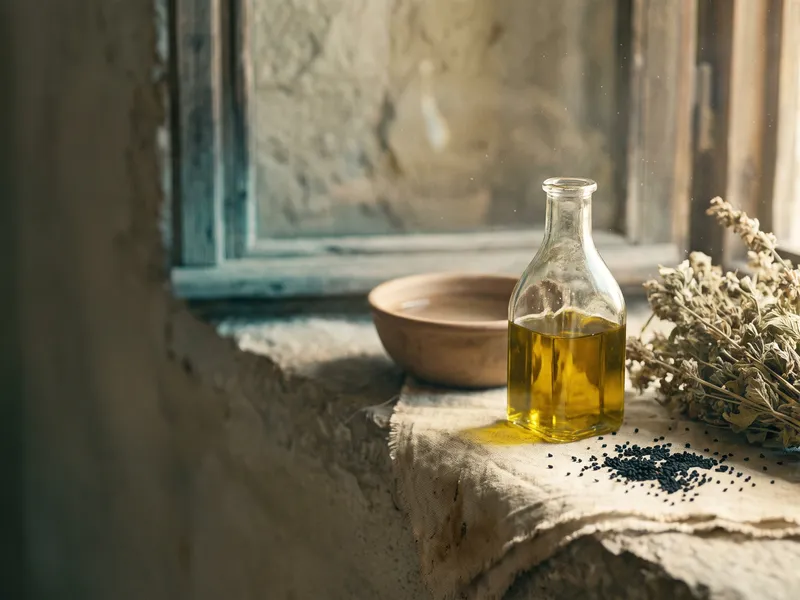
The sidr-leaf bath, the senna-water drink, cupping timed to a diagnosis of magic, olive oil recited over and rubbed on the scalp — all of these circulate widely, often attached to a scholar’s name, or to a bare collection name with no page. Some may well reflect real scholarly counsel to people going through something frightening; we simply could not trace any of them to a resolvable primary text the way the four reports above resolve. Sparse and traceable beats complete and unverifiable, so we are naming the gap rather than filling it with something we cannot show you.
If you are looking for a grounded, daily habit rather than a one-time remedy, the discipline the texts above actually describe — the two refuge chapters, Āyat al-Kursī, sustained recitation of Sūrat al-Baqarah — is exactly what the adhkār collected in Quran Gallery’s Adhkār are built around: short, sourced supplications meant to be repeated, not performed once and set aside.
May Allah protect us from every harm, seen and unseen, and guide us to seek it only through what He and His Messenger (peace be upon him) actually taught.
Continue
Ruqyah
Related
Ruqyah Sending Salawat Upon the Messenger: The Words, the Meaning, and Why It Opens Every Du'a Allah and His angels already send blessings on the Prophet (peace be upon him) — the Qur'an commands believers to add their own. Here is the exact wording he taught for it, what the two halves of it ask for, and why it belongs at the start and the end of every du'a. Ruqyah Seventy Thousand Angels at the Bedside: What Visiting the Sick Asks of You A hospital visit costs little and is easy to skip. Prophetic tradition treats it as weightier than that — with a reward attached, a form of words to bring, and a line to say for yourself on the way out. Ruqyah The Cure and the Doctor: What Prophetic Medicine Really Asks of Us "Sunnah medicine" gets sold as a supplement aisle or dismissed as folk remedy. The actual hadith say something narrower and more useful: seek treatment, eat in moderation, and treat the heart alongside the body — with every citation here checked against the printed page.