
Quran Gallery Blog · Articles
The Cure and the Doctor: What Prophetic Medicine Really Asks of Us
"Sunnah medicine" gets sold as a supplement aisle or dismissed as folk remedy. The actual hadith say something narrower and more useful: seek treatment, eat in moderation, and treat the heart alongside the body — with every citation here checked against the printed page.
6 min read6 sourcesRuqyah
Author:The Quran Gallery team
Search “prophetic medicine” and you land in one of two places: a shop selling black seed oil capsules with a hadith printed on the label, or an argument that faith and medicine are opposites and a believer has to pick a side. Neither is what the sources actually say. Read the hadith in full, in the order the compilers placed them, and a narrower, more useful claim emerges — one about how to treat illness, not a replacement for treating it.
Treatment Is Not a Failure of Trust
Start with the question a group of desert Arabs put to the Prophet (peace and blessings be upon him) directly: should we seek treatment at all, or does that mean we don’t trust Allah enough?
His answer settled it in the same breath he was asked:
“The Bedouin asked: ‘O Messenger of Allah, should we seek treatment?’ He said: ‘Yes, servants of Allah, seek treatment — for Allah has not sent down a disease without sending down its cure, or he said, its medicine — except for one disease.’ They asked what that was. He said: ‘Old age.‘” That is the wording on printed page 3/561 of , where al-Tirmidhī himself records the hadith and then grades it: ḥasan ṣaḥīḥ.
The imperative in that sentence is “seek treatment” — tadāwaw, addressed to people who were plainly asking permission first. Nothing in it treats a visit to a doctor, a course of medication, or a diagnosis as a lapse in faith. The two sit together: trusting that a cure exists, and going to look for it.
What the Qur’an Calls “Healing”
Two things in the Qur’an are named shifāʾ — healing — directly in the text. One is a food. The other is itself.
ثُمَّ كُلِى مِن كُلِّ ٱلثَّمَرَٰتِ فَٱسْلُكِى سُبُلَ رَبِّكِ ذُلُلًا ۚ يَخْرُجُ مِنۢ بُطُونِهَا شَرَابٌ مُّخْتَلِفٌ أَلْوَٰنُهُۥ فِيهِ شِفَآءٌ لِّلنَّاسِ ۗ إِنَّ فِى ذَٰلِكَ لَـَٔايَةً لِّقَوْمٍ يَتَفَكَّرُونَ Then eat from every kind of fruit and follow the ways your Lord has made easy for you. From their bellies comes a drink of varying colors, in which there is healing for people. In that is truly a sign for those who reflect.
— Sūrat al-Naḥl, 16:69
The verse is describing honey, produced by the bee two verses earlier in the same passage. It does not name a disease honey treats, or a dose. It calls the drink itself, as a category, a source of healing among the signs Allah points to for people who reflect.
The second thing carrying that same word is the Qur’an:
وَنُنَزِّلُ مِنَ ٱلْقُرْءَانِ مَا هُوَ شِفَآءٌ وَرَحْمَةٌ لِّلْمُؤْمِنِينَ ۙ وَلَا يَزِيدُ ٱلظَّـٰلِمِينَ إِلَّا خَسَارًا And We send down of the Qur’an that which is healing and mercy for the believers, while it increases the wrongdoers in nothing but loss.
— Sūrat al-Isrāʾ, 17:82
This is the verse scholars point to when they discuss ruqyah — reciting Qur’an over the sick, or over oneself, as a form of seeking healing alongside, not instead of, physical treatment. ʿĀʾishah reported that the Prophet (peace be upon him), when unwell, used to recite the protective sūrahs over himself and blow; when his final illness grew severe, she recited over him herself. That report sits on printed page 7/16 of , in a chapter Muslim titles “ruqyah for the sick with al-Muʿawwidhāt.” The verse itself does not describe recitation as a cure for a named disease; it names the Qur’an as shifāʾ, in the same breath as raḥmah — mercy — for those who believe it.
One Report About Black Seed, Read Two Ways
The best-known example in this whole genre is a single hadith, transmitted by more than one companion, about black seed:
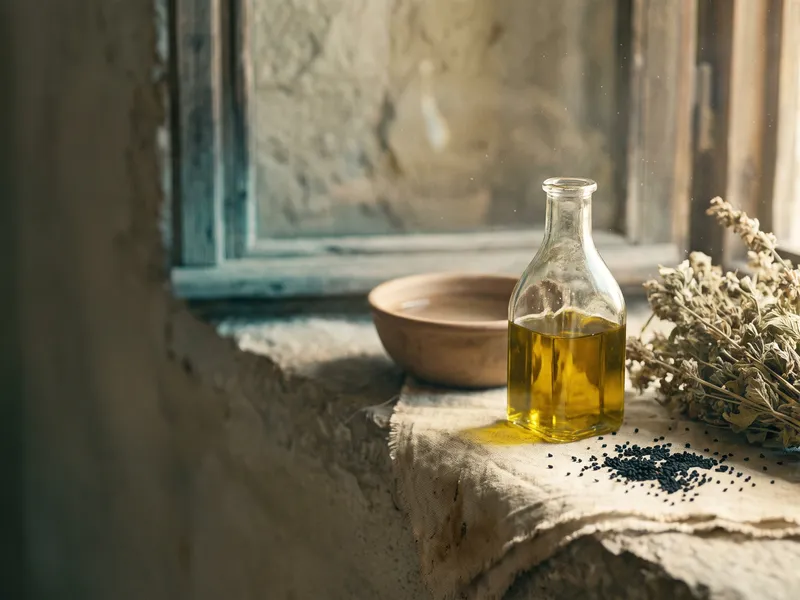
“Indeed in the black seed there is healing for every disease, except death.” That wording is recorded on printed page 7/124 of , from ʿĀʾishah, and again — through Abū Hurayrah, with the note that black seed means al-shūnīz — on printed page 7/25 of . Both of the two most widely relied-upon hadith collections carry it, each from a different companion.
What it needs is a careful reading. “Healing for every disease” sounds, on first hearing, like a guarantee that would make every other treatment unnecessary — and that is not how the classical commentators who actually sat with this wording read it. Abū Bakr Ibn al-ʿArabī, writing on this exact hadith, records that “our scholars say this went out in the form of a general statement, while what is meant by it is something specific,” because most illness comes down to a narrower set of causes the black seed addresses — not literally every ailment a person could have. That reading sits on printed page 1131 of .
We are reporting that reading, not offering our own — and reporting it is also as far as this piece goes. No dose, no claim that black seed treats a named illness, and no reason drawn from any of this to skip a diagnosis or a prescription. The same hadith that names it a mercy sits a few pages from the one that opens this article with a plain command to seek treatment.
Moderation Before Medicine
Before any specific remedy, the tradition returns often to a much plainer instruction: eat less than you think you need.
“No human fills a vessel worse than the stomach. A few bites that keep a person’s back upright are enough for him. If he must eat more, then a third for his food, a third for his drink, and a third for his breath.” Al-Tirmidhī records this on printed page 4/188 of and grades it the same way as the treatment-seeking hadith above: ḥasan ṣaḥīḥ.
The Qur’an frames the same restraint as a matter of what is lawful and wholesome, not merely what is permitted:
يَـٰٓأَيُّهَا ٱلنَّاسُ كُلُوا۟ مِمَّا فِى ٱلْأَرْضِ حَلَـٰلًا طَيِّبًا وَلَا تَتَّبِعُوا۟ خُطُوَٰتِ ٱلشَّيْطَـٰنِ ۚ إِنَّهُۥ لَكُمْ عَدُوٌّ مُّبِينٌ O mankind, eat from whatever is on earth that is lawful and wholesome, and do not follow the footsteps of Satan. He is truly a clear enemy to you.
— Sūrat al-Baqarah, 2:168
Read next to each other, the two texts make the same point from different directions: what and how much a person eats is treated as a matter worth regulating before illness, not only after it.
Two Kinds of Medicine, Neither a Substitute for the Other
Put the pieces together and “Sunnah medicine” turns out to name two different things, not one. There is treatment of the body — food, moderation, and the explicit instruction to see it through with a physician when needed. And there is treatment of the heart — reciting what the Qur’an itself calls shifāʾ, in worship and in ruqyah over the sick. Neither one is offered in these texts as a replacement for the other, and neither is offered as a replacement for a doctor.
If you want the second half of that — the recitations and duʿāʾ that Muslims have used as ruqyah for the sick, for anxiety, and for daily protection — Adhkar collects them with their sources, in Arabic, transliteration, and translation, the same way this article’s citations are built to be checked rather than taken on trust.
May Allah grant health to the sick among us, and heal what medicine cannot reach.
Continue
Ruqyah
Related
Ruqyah Sending Salawat Upon the Messenger: The Words, the Meaning, and Why It Opens Every Du'a Allah and His angels already send blessings on the Prophet (peace be upon him) — the Qur'an commands believers to add their own. Here is the exact wording he taught for it, what the two halves of it ask for, and why it belongs at the start and the end of every du'a. Ruqyah Seventy Thousand Angels at the Bedside: What Visiting the Sick Asks of You A hospital visit costs little and is easy to skip. Prophetic tradition treats it as weightier than that — with a reward attached, a form of words to bring, and a line to say for yourself on the way out. Ruqyah Ruqyah Belongs to Every Muslim: Answering the Questions People Actually Ask Ruqyah raises real doubts: who is allowed to do it, why it sometimes seems not to work, and how it differs from the magic it treats. We answer the questions directly, with every claim traced to the Qur'an or a resolvable hadith.