Quran Gallery Blog · Articles
Allāhu Akbar: The Phrase That Resizes Everything Else
Akbar is a comparative, and Arabic grammar expects a comparative to finish the sentence — greater than what? Allāhu Akbar never says. This is a look at where the Sunnah plants that unfinished sentence, and what happens to a person's sense of proportion when it gets said at the exact moment fear, anger or awe insist something else is the biggest thing in the room.
8 min read5 sourcesTasbih
Author:The Quran Gallery team
Every language has a shortcut for praising something by comparison: bigger than the last one, better than expected. Arabic has the same shape, and Muslims reach for it dozens of times a day in words most people can say without knowing what they are doing grammatically: اَللّٰهُ أَكْبَرُ, Allāhu Akbar. Akbar is a comparative — the same pattern Arabic uses for “older,” “cheaper,” “faster” — and a comparative, by the ordinary rules of the language, needs a second term. Bigger than what? The phrase reaches the exact point where a comparison is supposed to land, and then it does not finish the sentence.
A comparison with nothing on the other side
That silence is not a gap someone forgot to fill. It is the argument. To name what Allah is greater than — even to name it in order to dismiss it — is to put that thing on the same scale as Him, if only for the length of the sentence. Arabic has the grammar for this: akbar min (greater than) takes an object, and the object has to be a comparable thing. Allāhu Akbar refuses the construction. There is no min, no “than,” nowhere for a runner-up to stand.
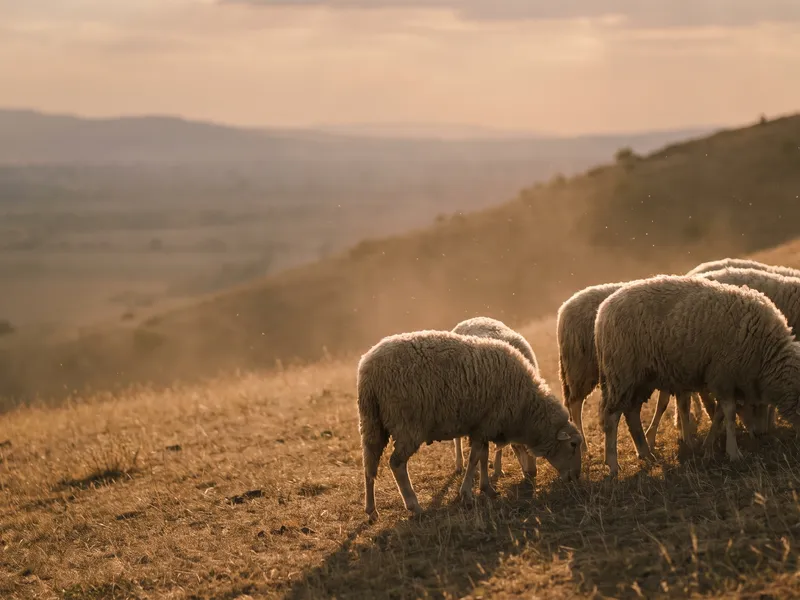
The blank is left empty exactly where a person’s mind wants to rush in and fill it. Say the phrase while afraid, and the sentence your fear was drafting — greater than my safety, greater than what I can survive — collapses before it is finished, because there is no slot in Allāhu Akbar for your fear to occupy. Say it looking down from a height, or watching something enormous burn, and whatever you were measuring yourself against has already lost a contest it was never entered into.
The doorway into every prayer
Islam does not leave this as an abstraction; it builds the phrase into the architecture of worship, starting at the very threshold.
مِفْتَاحُ الصَّلَاةِ الطُّهُورُ، وَتَحْرِيمُهَا التَّكْبِيرُ، وَتَحْلِيلُهَا التَّسْلِيمُ The key to prayer is purification, what seals it is the takbīr, and what releases you from it is the taslīm.
— Sunan Abī Dāwūd, printed page 1/22 of , narrated from ʿAlī.
Taḥrīmuhā shares its root with ḥarām — the takbīr that opens prayer is what makes ordinary conduct forbidden the instant it is said, no more talking, no more turning around. A person cannot walk into that sealed state by any door except the one word that concedes, out loud, that whatever was occupying their attention outside the prayer is not, in fact, the greatest thing available to think about. Every later movement of that same prayer — bowing, rising, prostrating, standing again — is stitched together with the same syllable, so the concession is renewed at every joint of the body, not made once and assumed.
Going up, and coming back down
The instinct is not confined to prayer. Jābir b. ʿAbdullāh described a habit of the travelling Companions:
كُنَّا إِذَا صَعِدْنَا كَبَّرْنَا وَإِذَا نَزَلْنَا سَبَّحْنَا Whenever we climbed, we said the takbīr, and whenever we came down, we said the tasbīḥ.
— Ṣaḥīḥ al-Bukhārī, printed page 4/57 of , hadith 2993, narrated from Jābir.
Gaining elevation is precisely the moment a person’s sense of their own size tends to inflate — a taller vantage point, a promotion, a summit reached, any occasion that puts someone physically or figuratively above where they were. The habit trained into a traveller’s body met that moment with the one sentence built to refuse comparison: greater, and no second term. Coming down carries the opposite risk, discouragement or a sense of having shrunk, so the word changes to tasbīḥ — declaring Allah exalted above any imperfection — which resizes the descent in the other direction: nothing about lower ground, a setback, or an ordinary return to level footing touches Him, so it should not be allowed to touch a person’s sense of their own worth either.
The ten days everyone is supposed to be loud in
The takbīr is not only a private habit; the Sunnah makes a point of saying it in public, on a schedule. Ramadan’s fast ends with an instruction attached directly to the ending:
… وَلِتُكْمِلُوا۟ ٱلْعِدَّةَ وَلِتُكَبِّرُوا۟ ٱللَّهَ عَلَىٰ مَا هَدَىٰكُمْ … …and [He wills] that you complete the count, and that you magnify Allah for having guided you…
The first response asked of a person who has just finished a month of fasting is not celebration for its own sake; it is a declaration of size, aimed at Allah rather than at the achievement. The same instinct is why the ten days at the start of Dhū al-Ḥijjah — the days the Prophet (peace and blessings be upon him) elsewhere called the best days for good deeds — became days people were expected to say it in the street, not just in the mosque:
وَكَانَ ابْنُ عُمَرَ وَأَبُو هُرَيْرَةَ يَخْرُجَانِ إِلَى السُّوقِ فِي أَيَّامِ الْعَشْرِ يُكَبِّرَانِ وَيُكَبِّرُ النَّاسُ بِتَكْبِيرِهِمَا Ibn ʿUmar and Abū Hurayrah used to go out to the marketplace during the ten days saying the takbīr, and the people would say it along with the two of them.
— Ṣaḥīḥ al-Bukhārī, printed page 2/20 of , recorded without a connected chain under a chapter heading in the Book of the Two Festivals.
Two of the most senior Companions walked into the one place in the city built entirely around arguing over what things are worth, and announced — repeatedly, audibly, in a way meant to be picked up by strangers — that none of it was the largest thing present. That public habit is the root of the takbīr Muslims are taught to raise their voices with through the ten days of Dhū al-Ḥijjah and the days of the ʿĪd that follows: not a private murmur but a communal correction of scale, said loudly enough for the market to overhear.
Fear, anger, and the moment awe interrupts
The earliest instruction to make takbīr came to the Prophet (peace and blessings be upon him) in a chapter named for a man wrapped in a cloak:
وَرَبَّكَ فَكَبِّرْ And your Lord — magnify [Him].
A later chapter closes an argument against every rival Allah’s opponents had proposed for Him — a child, a partner, a protector against weakness — with the same command:
… وَكَبِّرْهُ تَكْبِيرًۢا …and glorify Him with the utmost magnification.
Both verses answer a situation where something has just made itself feel enormous — a message too heavy to carry, a list of counter-claims against Allah’s uniqueness — with the same single-word correction. The pattern repeats almost exactly when the sky itself did the frightening. A solar eclipse alarmed the city badly enough that people assumed someone important had died and the heavens were reacting to it:
إِنَّ الشَّمْسَ وَالْقَمَرَ مِنْ آيَاتِ اللَّهِ، وَإِنَّهُمَا لَا يَنْخَسِفَانِ لِمَوْتِ أَحَدٍ وَلَا لِحَيَاتِهِ، فَإِذَا رَأَيْتُمُوهُمَا فَكَبِّرُوا، وَادْعُوا اللَّهَ، وَصَلُّوا، وَتَصَدَّقُوا The sun and the moon are among the signs of Allah. They do not eclipse for anyone’s death or anyone’s life. So when you see that, say the takbīr, call on Allah, pray, and give charity.
— Ṣaḥīḥ Muslim, printed page 2/618 of , from the report of ʿĀʾishah on the eclipse prayer.
The instruction does not open with an explanation of orbital mechanics. It opens with takbīr, before the prayer, before the charity — because a sky gone suddenly strange has, in a few minutes, become the largest thing in a frightened person’s mind, and the first word handed to them is built to contest exactly that claim.
It works the other way too, when the feeling is relief or overwhelming gratitude rather than fear. A man praying behind the Prophet (peace be upon him) was overtaken by something during the prayer and, without being asked, said more than the ritual required:
اللَّهُ أَكْبَرُ كَبِيرًا، وَالْحَمْدُ لِلَّهِ كَثِيرًا، وَسُبْحَانَ اللَّهِ بُكْرَةً وَأَصِيلًا Allah is greater, greatly so; praise belongs to Allah, abundantly; and Allah is exalted, morning and evening.
— Ṣaḥīḥ Muslim, printed page 2/99 of , hadith 601, narrated from Ibn ʿUmar.
He doubled the comparative — akbar kabīrā, greater, greatly — as if the plain word alone could not hold what he was feeling. Rather than correcting an improvised addition to the prayer, he was told the gates of heaven had opened for it. The phrase, in other words, has room in it for whatever size of feeling shows up; it does not need to be trimmed down to fit a fixed formula, because “greater” was never a bounded quantity to begin with.
Anger runs on a narrower version of the same miscalculation fear and awe produce: it needs its target to be the biggest thing currently in the room, large enough to justify the size of the reaction about to follow it. Saying the takbīr in that moment does not deny that the provocation happened or claim the grievance does not matter — it reasserts the one fact that was never actually in dispute, that whatever just happened is not greater than Allah, and therefore is not the largest thing available to think about right now. It is the same correction that steadies someone on a summit or in a market stall, aimed instead at a spike of temper before it turns into a decision.
Saying it and meaning it
The phrase is short enough to say without thinking, which is exactly why it is planted at so many junctions: the doorway into every prayer, a height climbed, a marketplace during the ten best days of the year, a sky gone frighteningly strange. Repetition trains the sizing before the emergency arrives, so that when fear or anger or awe actually show up, the correction is already loaded rather than something to be reasoned into under pressure. Quran Gallery’s adhkar collection carries the takbīr in its everyday forms — after prayer, on waking, alongside the other remembrances — in Arabic and in translation, for the ordinary days between the moments this article has been describing.
Continue
Tasbih

Related
Articles The Ten Days of Dhū al-Ḥijjah: What the Evidence Actually Says "The best ten days of the year" is repeated so often it starts to sound like folklore. It rests on an oath in the Qur'an and a single prophetic report — read here clause by clause, including the point where the commentators disagree with each other about which ten nights are even being sworn by. Articles Ten Days, No Itinerary: What Dhul Hijjah Actually Asks of You Most of what gets written about the first ten days of Dhul Hijjah describes a pilgrimage most readers will never make. The sources name a much shorter, stranger list for everyone else — fasting, takbir, a sacrifice paid for from a distance, charity, the Qur'an, and the same obligations you already had — and give a reason, not just an instruction, for each one. Articles The Secret of Du'a: Come to Allah with Nothing to Offer but Need A fugitive prophet begging for "whatever good" a stranger might spare, and a dust-covered traveller crying "O Lord, O Lord" with his hands in the air — two pictures of what it actually looks like to have nothing left to bring Allah but need itself.